Why Google Ads Works for Dental Practices
Google Ads allows you to reach a highly targeted audience. With advanced targeting options, you can show your ads to people actively searching for dental services in your area. Your ads are seen by the right people at the right time, increasing the likelihood of a booking.
Unlike radio, TV, or word-of-mouth, you can track performance in real time. You'll see how many clicks your ads receive, how many conversions they generate, and how much you spend per click. You'll identify your most profitable patients and focus on the keywords driving them to book.
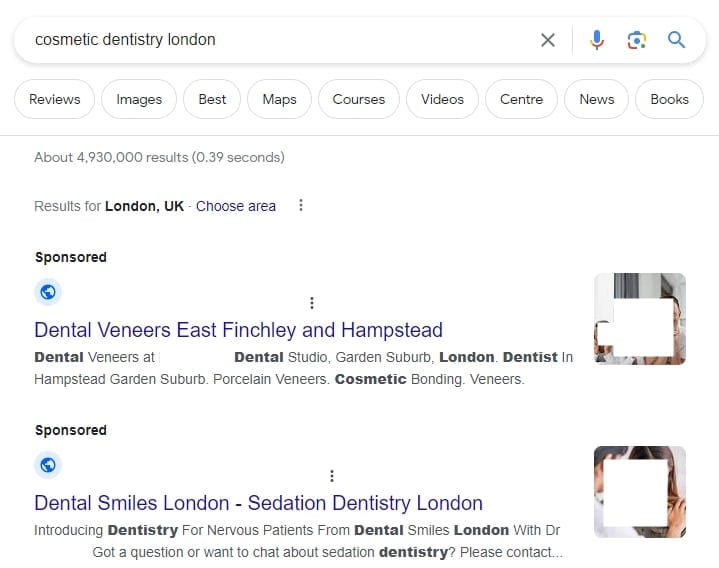
For one of our cosmetic dentistry clients, we were able to start reliably generating 35-40 high-quality leads every single day. That's what a properly structured dental campaign can achieve.
Which Campaign Types Work for Dentists?
Search campaigns are the starting point. They reach people while they're actively searching for a dentist. You identify the right keywords and create ads explaining why they should choose your practice.
Display campaigns work for remarketing, showing ads to people who visited your website but didn't book. These are lower cost and effective at bringing back undecided patients.
We typically recommend starting with Search, then layering in remarketing once you have enough traffic data.
Keyword Research for Dental Campaigns
Start with broad keywords describing your services: "dentist," "dental clinic," "teeth whitening." Then narrow them down through research to find the keywords you should target: "cosmetic dentist for veneers," "dental implant specialist," "emergency dentist [city]."
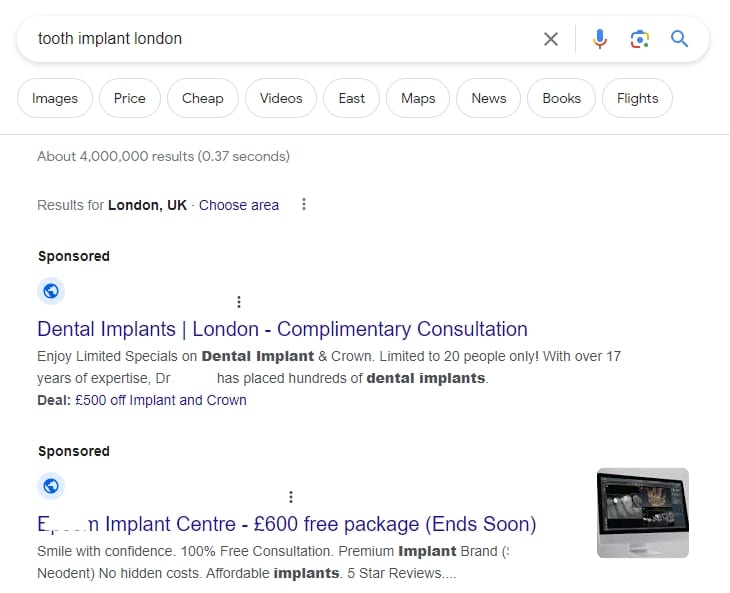
Generic "dentist near me" searches are expensive and attract low-intent browsers. Terms like "cost of veneers in [city]," "how long does Invisalign take," and "is dental implant surgery painful" reveal high intent and strong motivation. Focus your budget there.
Use tools like Google Keyword Planner, SpyFu, or Semrush. Don't just target what seems obvious. Check what your competitors are bidding on, and look for gaps they're missing.
Campaign Structure That Works
Separate ad groups (and sometimes separate campaigns) for each service line:
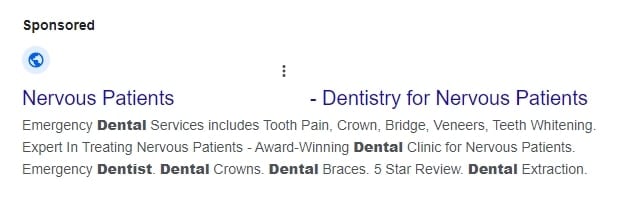
- Dental implants: highest value, highest CPC, needs dedicated budget
- Cosmetic dentistry: veneers, whitening, Invisalign
- General dentistry: check-ups, cleanings, fillings
- Emergency dentistry: urgent care, same-day appointments
Each patient type sees an ad that speaks to their specific need instead of a generic list of treatments. This improves Quality Score, reduces CPC, and increases conversion rates.
Tracking What Matters
"Getting leads" means nothing if patients don't sit in your chair. We track:
- Phone calls: attributed to specific keywords and ads
- Form submissions: booked consultations
- CRM integration: which leads become confirmed treatments
When Google Ads knows which keywords generate actual patients (not just form fills), it optimises towards those keywords. Most dental practices miss this step.
Landing Pages That Convert
Your landing page should be crafted specifically for each service. The message that brought them in must be front and centre, creating a straight line towards the booking. Key elements:
- Headline matching the ad they clicked
- Trust signals: years of experience, patient reviews, before/after photos
- A clear, prominent booking form or phone number
- Specific information about the treatment they searched for
Frequently Asked Questions
How much do Google Ads cost for dentists?
Cost per click for dental keywords typically ranges from $3 to $20, depending on procedure and location. Dental implant keywords are the most expensive. As of 2026, most dental practices we work with generate leads at $15-$60 each, depending on the treatment type.
Should I advertise all my services at once?
Start with your highest-value services. If dental implants generate the most revenue per patient, start there. Get that campaign profitable, then expand into cosmetic, general, and emergency.
How quickly will I see results?
Most dental campaigns start generating enquiries within 2-3 weeks. The first 60-90 days are an optimisation period. One of our clients went from zero to 35-40 leads per day once the campaign was fully optimised.